

Traditions
Customs and Traditions of Rural Sardinia
Rural Sardinia is a land of ancient traditions, where customs passed down through generations continue to shape the daily lives of its communities. The central region, with its mountainous landscapes and small villages scattered among the hills, serves as the heart of a culture deeply rooted in shepherding, agriculture, and a strong connection to nature. Here, ancient rituals, popular celebrations, music, dance, cuisine, and craftsmanship form an essential part of a vibrant and living cultural heritage.
Traditional Costumes
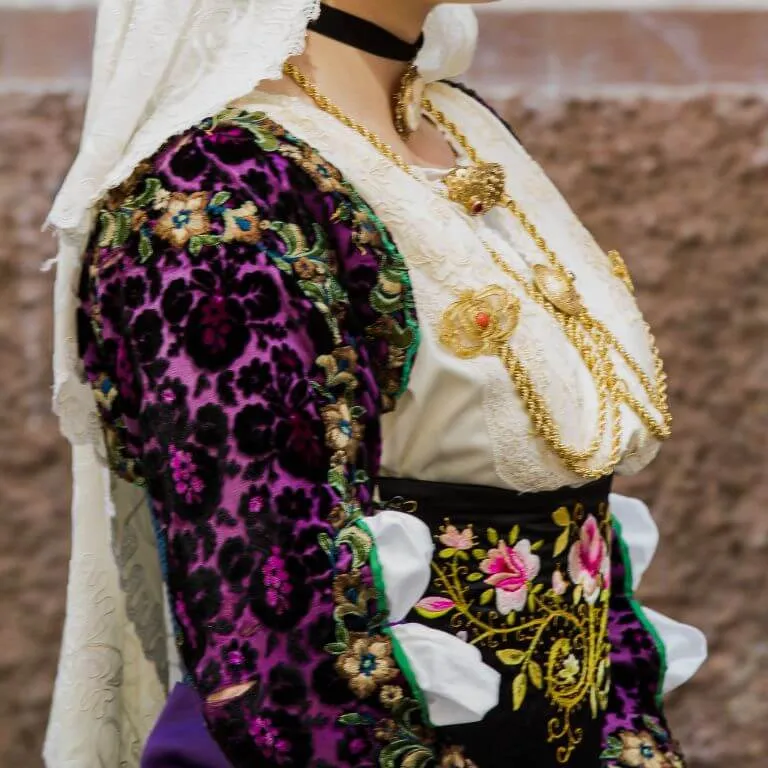
The traditional Sardinian costume is one of the most distinctive elements of the island’s rural culture. Each community has its unique traditional clothing, differing in colors, fabrics, and details, yet all are united by meticulous craftsmanship and symbolic value.
Female Costume
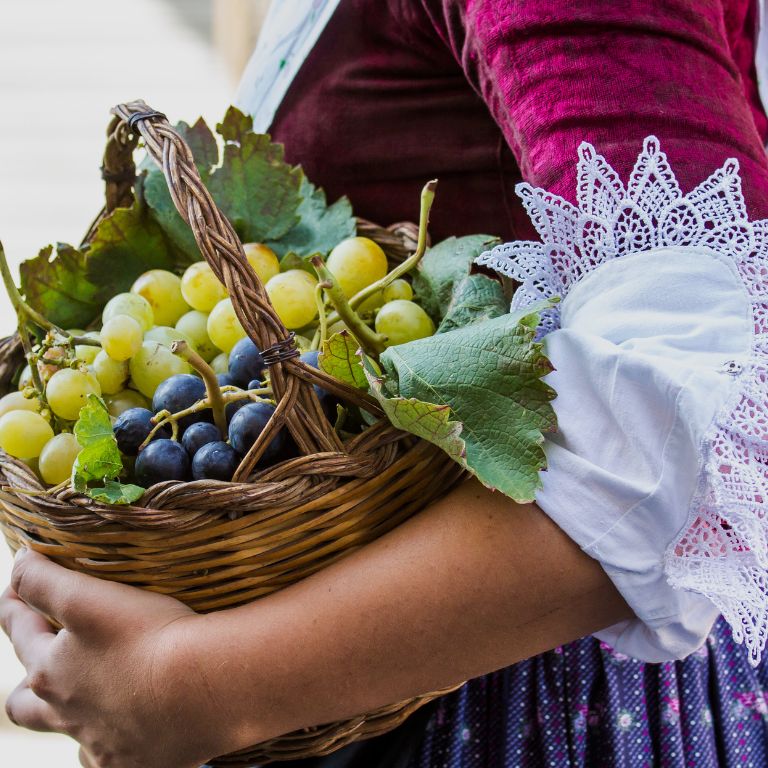
The women’s traditional attire from central Sardinia, especially in the Barbagia region, is vibrant with colors and elaborate embroidery. Women wear long, heavy skirts, often made of velvet or wool, paired with embroidered bodices and intricate aprons. Their heads are adorned with silk or cotton scarves decorated with geometric or floral patterns. The costume also changes depending on the occasion, with specific outfits for religious festivities, weddings, and daily life. Jewelry, particularly pieces crafted in gold or silver filigree, completes the attire and is often passed down through generations.
Male Costume
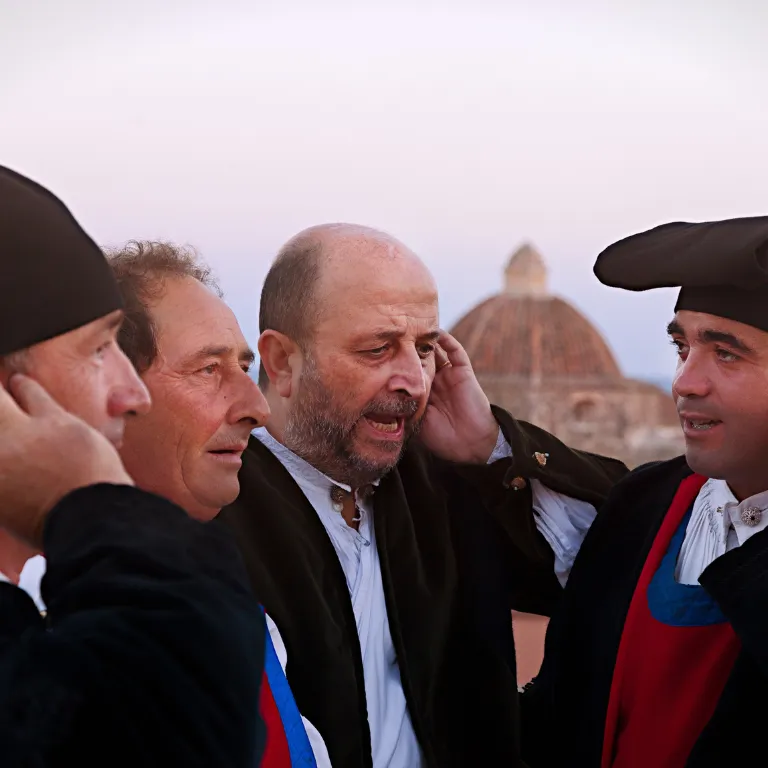
The men’s traditional attire is simpler yet equally meaningful. It consists of linen or cotton trousers, a short velvet jacket, and a black wool cap known as the berritta. For special occasions, variations of the costume are worn, while shepherds often don sheepskin cloaks during the colder months.
Traditional Music and Dance
Music and dance are integral parts of rural Sardinian culture. Traditional instruments like the launeddas and the accordion accompany festivities and celebrations.
Cantu a Tenore
One of the oldest and most distinctive musical expressions of central Sardinia is cantu a tenore, a polyphonic singing style performed by four singers, each with a specific role: bassu, contra, mesu oche, and oche. This type of singing, recognized as an intangible cultural heritage by UNESCO, is deeply connected to pastoral life and mimics the sounds of nature, such as the wind and animals.
Ballu Tundu
The most widespread traditional dance is the ballu tundu, a circular dance performed during popular festivities. Participants, both men and women, hold hands and move in a circle to the rhythm of the music, executing synchronized steps that symbolize the harmony of the community.
Traditional Festivals and Folklore
The traditional festivals of rural Sardinia are events of extraordinary beauty, rich in symbolism and ancient meanings, often tied to natural cycles and agrarian life. Many of these celebrations combine ancient pagan rituals with Christian practices, a distinctive feature of Sardinian culture.
Barbaricino Carnival
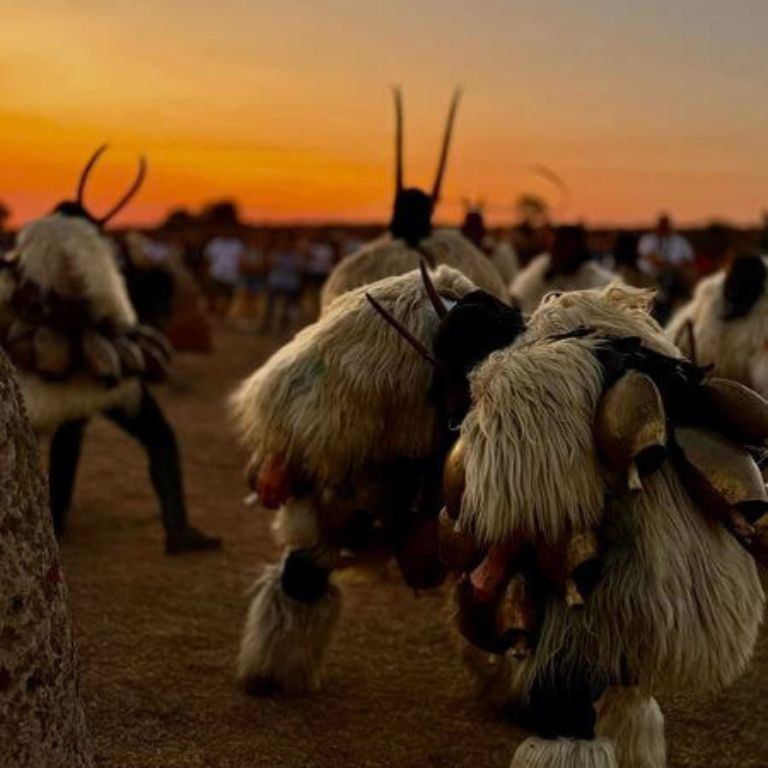
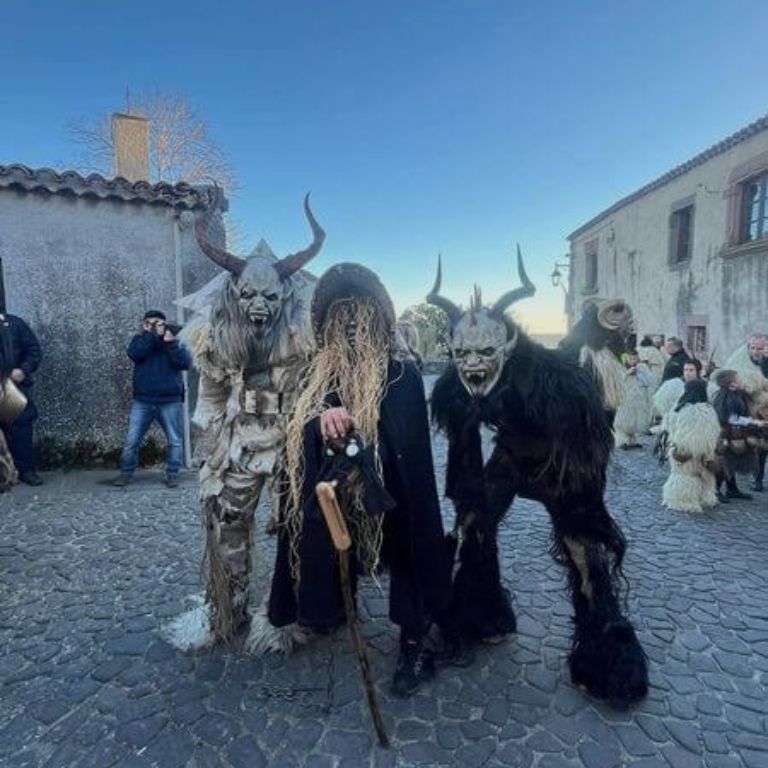
One of the most emblematic events in central Sardinia is the Barbaricino Carnival, a celebration rooted in ancient times, distinguished by its rituals linked to nature and pastoral life. In small towns like Mamoiada, Ottana, and Orgosolo, the carnival features evocative and archaic masks such as the Mamuthones and Issohadores.
- Mamuthones wear black wooden masks, heavy sheep wool garments, and cowbells on their shoulders. Their slow, rhythmic procession, accompanied by the sound of the bells, represents a ritual dance thought to have propitiatory origins, connected to fertility and nature.
- Issohadores, dressed in vibrant colors, dance around the Mamuthones and symbolically capture spectators with ropes, a gesture symbolizing the capture of fortune and fertility for the year ahead.
Other notable carnivals include the Boes and Merdules masks of Ottana, which celebrate the relationship between man and animal, civilization and untamed nature, through visually striking choreographies.
Religious and Agricultural Festivals
eligion and agricultural life are deeply intertwined in rural Sardinia. The Feast of Saint Anthony Abbot, celebrated on January 16, is a crucial event in the Barbaricini communities. On the night of the festival, large bonfires are lit in village squares, marking the beginning of Carnival and invoking the saint’s protection against diseases and natural calamities.
The Feast of the Redeemer in Nuoro, held at the end of August, is another unmissable event. This religious celebration features a solemn procession in traditional costume that culminates in a ceremony atop Mount Ortobene, home to the statue of Christ the Redeemer. During the procession, groups of men and women in traditional Sardinian attire parade, creating a visually stunning spectacle that blends devotion with cultural pride.
Plan Your Trip Now!
Ready to experience an unforgettable adventure in Sardinia? Contact us to create your personalized itinerary and discover activities tailored to your passions.